Where your study, practice, and service come together
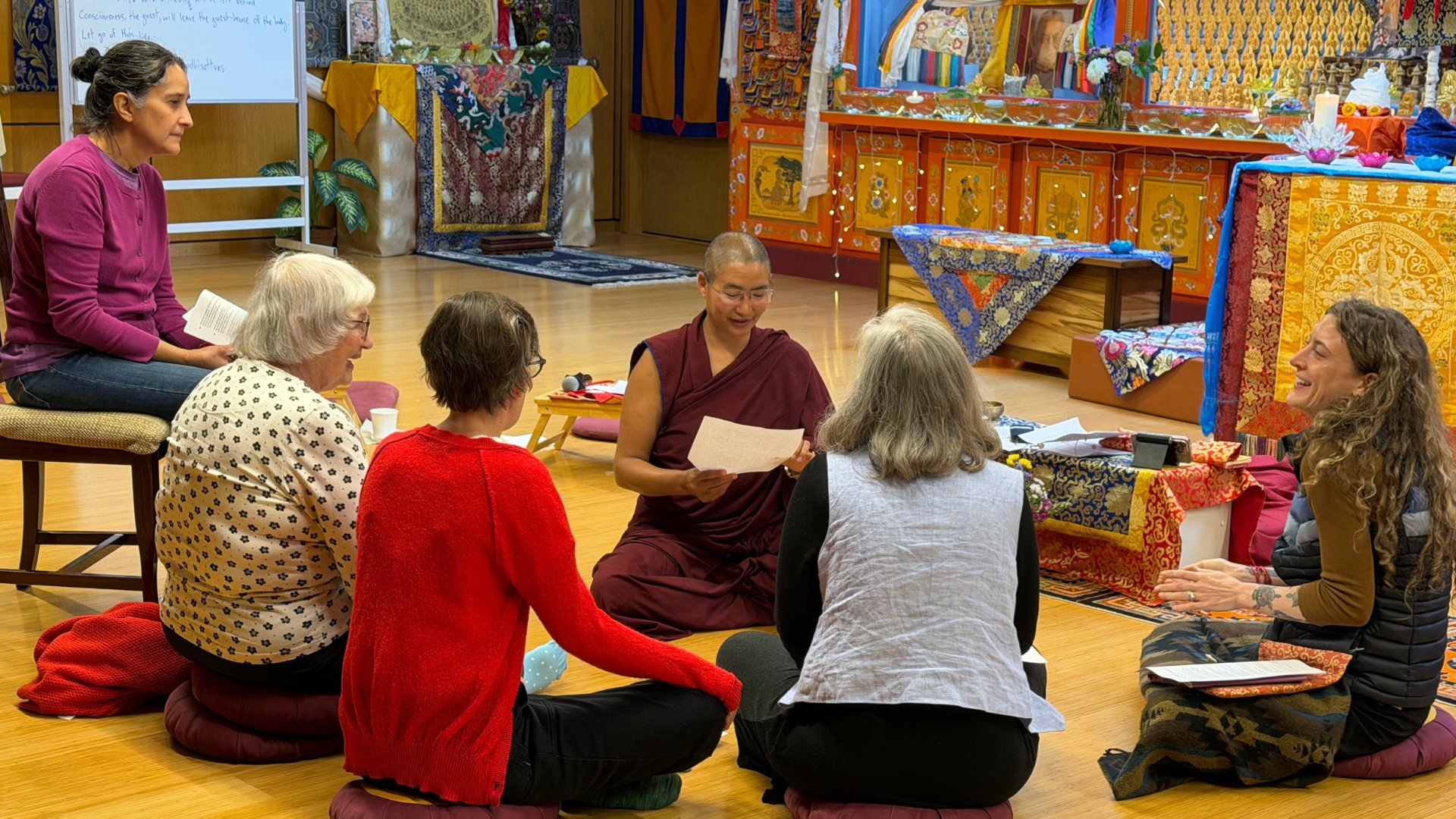
A small-group discussion with a teacher during a community retreat day at Maitripa College.

Formation is what happens when your study of Buddhist philosophy, your meditation practice, and your service begin to inform one another, over two years, with teachers and a cohort alongside you. It isn’t a separate track; it runs through the whole degree.
How Formation Is Built into the MA in Applied Buddhism
- 1
In philosophy class
You learn the language of formation, and a clear pathway for checking where you are in any given moment on your journey.
- 2
Through the meditation sequence
Three courses take you from foundational concentration and analytical meditation to cultivating compassion and sustaining compassion for yourself and others. You keep a record of your practice, and learn to describe it in the terms of the Tibetan tradition and of contemporary research.
- 3
In four Spiritual Formation Groups
Taken with your cohort, the Groups are where you reflect on how your study, meditation, and service are shaping you, and how you understand your own positionality in relation to others.
- 4
At residencies
Twice a year your cohort gathers in Portland for oral presentations, practice in the meditation hall, and time together as a community.
- 5
In the final group
You account for how study, practice, and service have come together, and what that integration means for you and for your work.

What changes for you, and how, is yours to discover and to say.
What We Ask, and What We Don’t
The College does not grade your inner life or claim to measure spiritual attainment. What we assess is your work and the account you give of it.
What we ask is that you engage seriously and over time, and that you learn to give an honest, well-supported account of your formation: one that makes sense to you, within the tradition, and to the people with whom you work.
“Will this change me?”
Many students find that it does, but we don’t promise a particular outcome. What we promise is the structure: two years of study, practice, and service held together, with faculty and a cohort alongside you, and the expectation that you reflect on what is happening.